
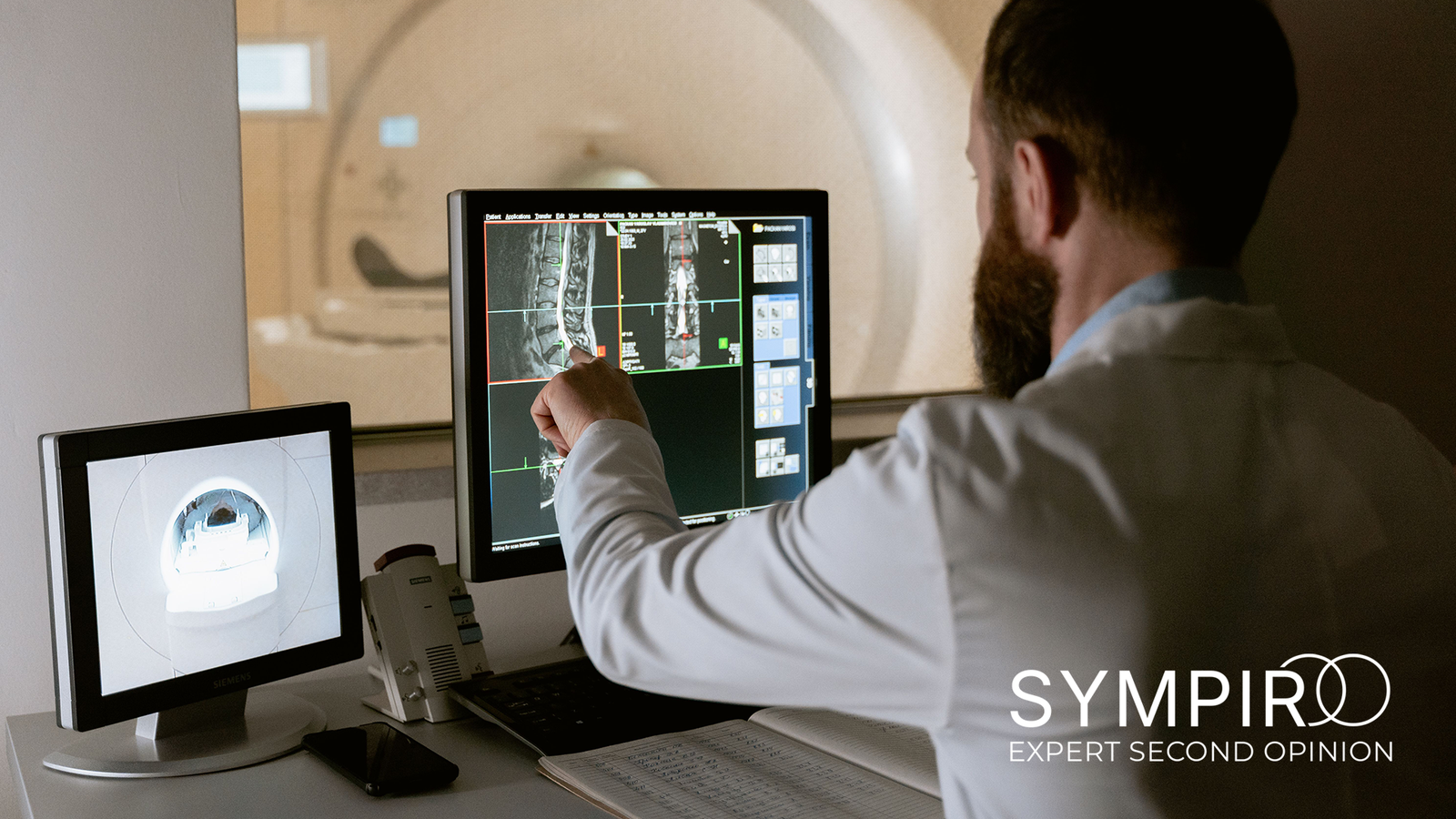
Errors in imaging reports happen more often than most people assume. An independent review of the report is a simple way to protect yourself from a wrong diagnosis and unnecessary treatment.
When a patient receives the result of an MRI, CT or X-ray, they tend to treat the radiologist's report as a final verdict. Yet interpreting medical images is one of the most complex and subjective areas of medicine — a field in which even an experienced specialist can miss something.
A number that gives pause: 30%
Back in 1949, the American radiologist Leo Garland conducted the first large-scale study of the accuracy of radiology reports. The result was sobering: experienced physicians failed to notice clinically significant findings in roughly 30% of chest X-rays that already showed signs of disease. Most striking of all — more than 75 years later, despite every technological advance, that figure has barely changed.
Modern data confirm the scale of the problem. On second review, discrepancies between a general radiologist and a subspecialty expert reach 12 to 40% of cases, depending on the type of study. Up to 84% of all errors are so-called perceptual errors, where the finding is simply not seen on the image.
Why errors happen in the first place
The cause is not negligence. The reasons are systemic:
- fatigue and heavy workload — accuracy drops toward the end of a shift;
- lack of subspecialization — a general radiologist reports on the brain, the joints and the lungs alike;
- the nature of human perception — our brains did not evolve to hunt for tiny anomalies in images;
- cognitive biases — such as “anchoring” on a first impression.
What is telling is the flip side: when a scan is re-read by a second physician of the same subspecialty, the error rate falls to 2–2.7%. That is precisely why a second opinion is not a sign of distrust, but a sensible standard in medical practice worldwide.
How to get a second opinion without leaving home
A repeat consultation used to mean weeks of waiting and trips between clinics. Today it can be handled online. The Sympiro platform lets you upload MRI, CT, X-ray or ultrasound images through a secure personal account and receive an independent report from a board-certified radiologist.
Sympiro's key distinction is the ability to choose the format of the review. You can request a report from a single independent radiologist, and for complex or contested cases — a panel of three specialists, each of whom assesses the images independently. Three independent opinions sharply raise the odds that no significant detail is overlooked.
Who benefits most
- before surgery or an invasive procedure — to confirm the diagnosis is correct;
- with a cancer diagnosis — the accuracy of staging determines the treatment plan;
- with an unclear or contradictory report — to obtain a plain-language explanation;
- with a serious, life-changing diagnosis — a second opinion brings peace of mind.
You can review a scan and receive an independent report at sympiro.com. It is a simple step that helps you make medical decisions with confidence — based not on one, but on several expert perspectives.