
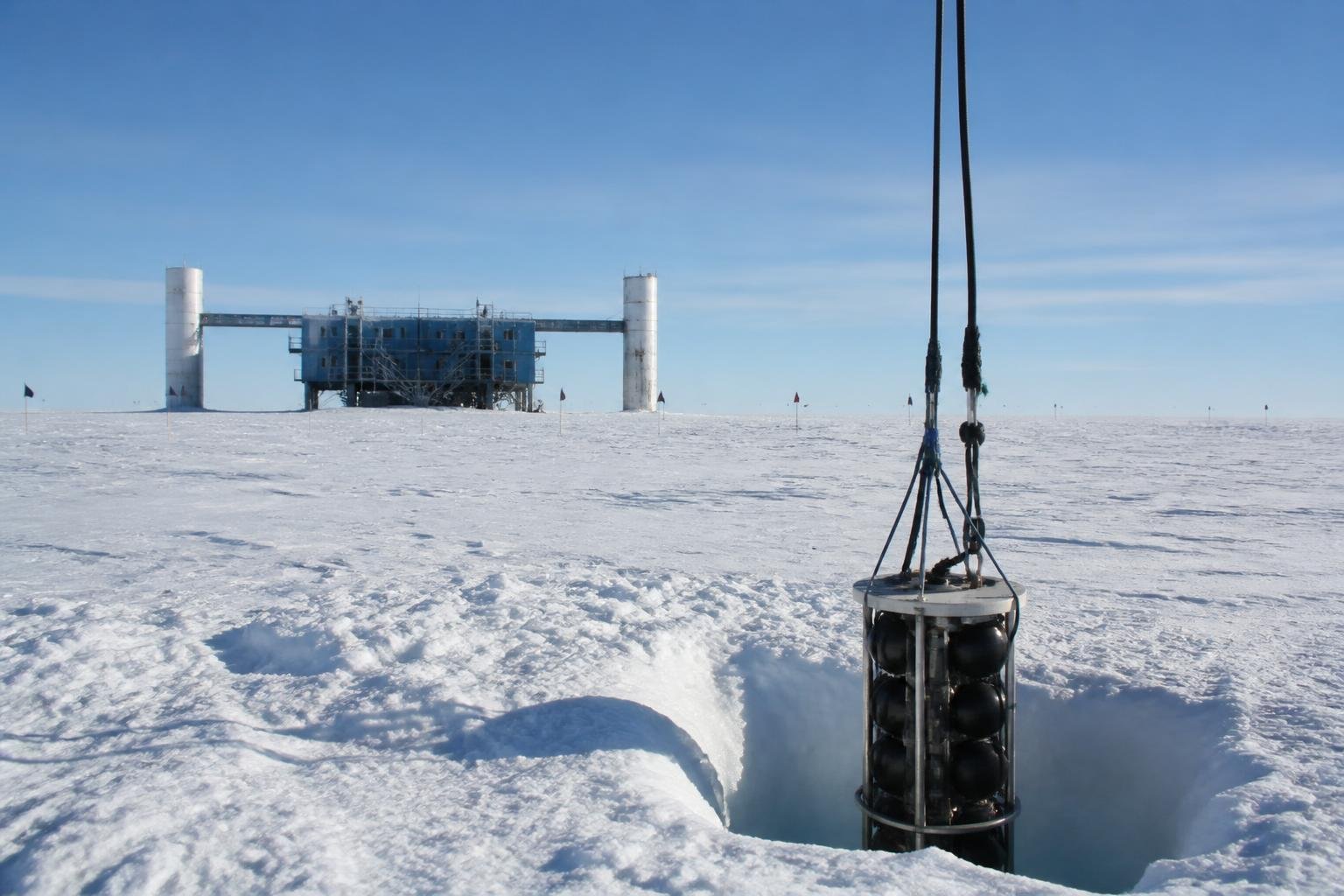
Francis Halzen has won the 2026 Nobel Prize in Physics for his work on the IceCube Neutrino Observatory and the discovery of high-energy neutrinos from beyond Earth, the Royal Swedish Academy of Sciences announced.
IceCube operates at the South Pole in Antarctica, with the University of Wisconsin–Madison as its lead institution. Halzen, an 82-year-old Belgian-born scientist affiliated with the university, began researching ways to detect neutrinos there in the 1980s.
Neutrinos are tiny particles that are difficult to observe directly. Scientists detect them through the flashes of light or charged particles produced when they interact with other matter. The high-energy neutrinos Halzen studied can carry clues about the cosmos.
Halzen spoke to the Nobel committee by phone from Italy after the announcement. This year’s prize carries 12 million Swedish kronor, about $1.2 million.












Please note! Comments are published by readers. The opinions expressed may not reflect the position of the editorial team. USCT is not responsible for the content of readers' opinions and asks authors to observe moral standards, not to incite national or racial hatred, and to avoid rudeness. Think before you speak. You are responsible for your words! By publishing an opinion, you agree to the rules! If this request is ignored, USCT reserves the right to deprive the user of the ability to leave comments.